

Gum cancer is a rare form of oral cancer that develops in the gum tissue, and catching it early makes a real difference in treatment outcomes. At Lygos Dental, dentist Dr. Betül Türkhan evaluates suspicious gum changes — a sore that won’t heal, a red or white patch, a lump, or unexplained bleeding — through a clinical oral exam and a referral-based diagnostic workflow. This guide explains what gum cancer is, the early warning signs to watch for, and when a lasting change in your gums should be checked by a specialist.
Gum cancer is a type of oral cancer that develops in the tissues of the gums. At Lygos Dental, dentist Betül Türkhan sees these cases regularly: the clinic has treated roughly 3,000 patients a year since it opened in 2016, and persistent gum changes — non-healing sores, lumps, or red and white patches — are among the warning signs her team checks for. Catching gum cancer early matters, because the gums sit in plain view during a routine dental exam, which makes the dentist’s chair one of the first places it can be spotted.
What Is Gum Cancer?
Gum cancer (also called gingival cancer) is a form of oral cavity cancer that develops in the tissues around the teeth. Most cases are squamous cell carcinoma, which starts in the thin, flat cells lining the mouth. Because early symptoms can resemble common gum problems, persistent changes should be checked by a dental professional.
Common Signs And Symptoms
Signs vary from person to person, but these are the symptoms clinicians most often associate with cancers of the mouth and gums:
- A sore or ulcer on the gum that doesn’t heal.
- A lump, thickened area, or uneven swelling along the gumline.
- Unusual bleeding from the gums that isn’t explained by brushing technique or gum disease.
- Red or white patches on the gums or nearby mouth lining.
- Loose teeth, a change in how dentures fit, or a tooth-extraction site that doesn’t heal as expected.
- Pain, tingling, or numbness in the gums, jaw, or lip.
If you have a mouth sore or gum change that lasts longer than two weeks, book a dental appointment. Most causes are not cancer, but it’s worth ruling out anything serious.

Table of Contents
Risk Factors
No single factor causes gum cancer, yet certain exposures and health conditions raise risk. The strongest, well‑established risks for oral cancers include tobacco and heavy alcohol use.
- Smoking cigarettes, cigars, pipes, or using smokeless tobacco.
- Frequent or heavy alcohol consumption (especially when combined with tobacco).
- Age (oral cancers are more common in older adults).
- A history of head and neck cancer.
- Weakened immune system.
- Poor diet low in fruits and vegetables.
- Chronic irritation and untreated gum disease may complicate oral health; they should be addressed even though they are not considered primary drivers in the way tobacco and alcohol are.

How Gum Cancer Is Diagnosed
Diagnosis starts with a dental or medical exam of the mouth, gums, tongue, and neck. If a suspicious area is found, a biopsy is done to confirm whether cancer cells are present. Imaging tests such as CT, MRI, or PET scans may be used to understand the size of the tumor and whether it has spread.
Treatment Options
Gum Cancer Stages and Prognosis
Gum cancer is staged from 1 to 4 based on the size of the tumor, whether it has reached the lymph nodes, and whether it has spread beyond the mouth. The stage at diagnosis shapes both the treatment plan and the outlook, which is one more reason catching changes early makes such a difference.
- Stage 1: A small tumor limited to the gum tissue, with no spread to the lymph nodes. Surgery to remove the lesion is usually enough, and cure rates are high at this stage.
- Stage 2: A larger tumor that is still confined to the gum, without lymph node involvement. Treatment is typically surgery, sometimes followed by radiation, and the outlook depends largely on getting clear surgical margins.
- Stage 3: The cancer has grown further or reached a nearby lymph node. Treatment usually combines surgery with radiation, and chemotherapy may be added; recovery is more demanding and needs close follow-up.
- Stage 4: The cancer has spread to several lymph nodes, nearby structures such as the jawbone, or distant parts of the body. Treatment combines surgery, radiation and chemotherapy, and the prognosis depends heavily on how far it has spread and the patient’s overall health.
These descriptions are general guidance, not a substitute for a diagnosis. Every case is different, so the actual stage, prognosis and treatment plan should be confirmed with an oncologist or oral surgeon who has examined you.
Treatment depends on the tumor’s size, location, and stage, along with your overall health. A head and neck cancer team often includes an oral surgeon, ENT surgeon, oncologist, and radiation specialist.
- Surgery to remove the tumor, sometimes with removal of nearby lymph nodes.
- Radiation therapy, either after surgery or as a main treatment in selected cases.
- Chemotherapy given with radiation (chemoradiation) for higher‑risk or more advanced disease.
- Targeted therapy or immunotherapy may be considered for certain advanced or recurrent cancers, based on specialist evaluation.
Ask your care team how treatment may affect chewing, speech, and appearance, and whether dental work is needed before radiation.

Can Gum Cancer Be Prevented?
You can’t prevent every case, but you can lower risk and improve early detection.
- Stop using tobacco in any form.
- Limit alcohol and avoid combining heavy drinking with tobacco.
- Keep up with daily brushing and interdental cleaning to reduce gum inflammation and infections.
- Eat a balanced diet rich in fruits and vegetables.
- See a dentist regularly for check-ups and oral cancer screening, especially if you have risk factors.
Recovery And Follow-Up Care
After treatment, follow-up visits help monitor healing and check for recurrence. Your dentist and oncology team may recommend more frequent cleanings, saliva management, nutrition support, and exercises for jaw function. Report new sores, swelling, bleeding, or unexplained pain promptly rather than waiting for the next appointment.
Frequently Asked Questions
What are the first signs of gum cancer?
Nonhealing sore, persistent red/white patch, lump, bleeding, pain, loose teeth, numbness.
Is cancer of the gum curable?
Yes, early gum cancers are often curable with surgery, sometimes radiotherapy/chemotherapy.
What did gum cancer look like?
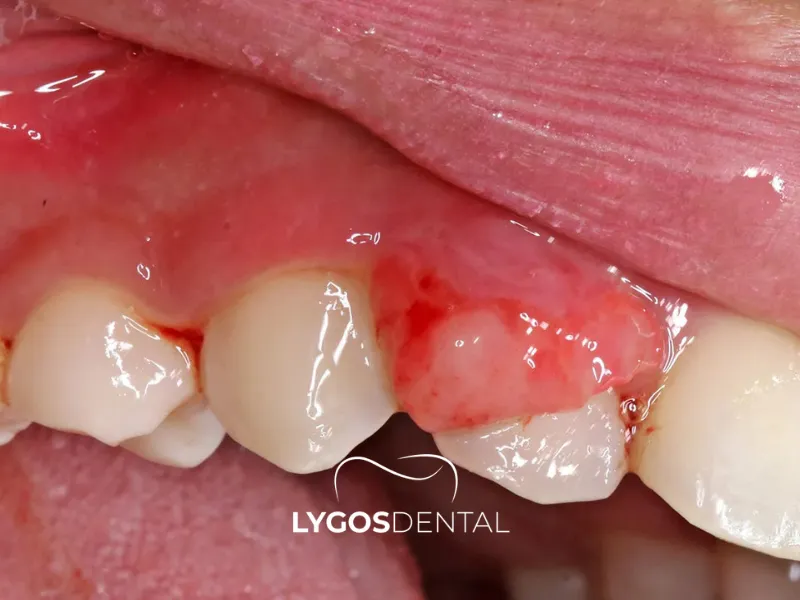
It may appear as an ulcer, red/white patch, swelling, or wartlike growth.
How to prevent gum cancer?
Avoid tobacco, limit alcohol, keep good oral hygiene, get regular dental checkups.
What are the 7 warning signs of mouth cancer?
Nonhealing ulcer, red/white patch, lump, persistent mouth pain, difficulty swallowing, numbness, persistent hoarseness.
What is the 3 finger test for mouth cancer?
Use three fingers to palpate mouth and neck for lumps, hardness, asymmetry.
How is gum cancer different from gingivitis or periodontitis?
Gum cancer usually shows up as one abnormal spot — a sore that won't heal, a lump, or a red or white patch that doesn't clear up with cleaning or antibiotics. Gingivitis and periodontitis tend to affect several areas at once, cause bleeding gums, and improve with professional cleaning and good oral hygiene. If a single area keeps changing or won't heal after about two weeks, have a dentist check it.
When should I see a dentist for possible gum cancer?
Book an appointment if a gum sore hasn't healed in two weeks, or if you notice a red or white patch, a lump, persistent bleeding, or a tooth that becomes loose without an obvious cause. Early evaluation matters, because gum cancer found at an early stage is far easier to treat.
Can gum cancer come back after treatment?
Yes. Like other oral cancers, gum cancer can return, which is why follow-up care matters. Your team will schedule regular check-ups and imaging to catch any recurrence early, and lowering risk factors such as smoking and alcohol reduces the chance of it coming back.
Can I get dental implants after gum cancer treatment?
Often yes, but it depends on how much healthy bone and tissue remain after surgery and whether you had radiation to the jaw. Implant planning usually happens once healing is complete and the area is confirmed cancer-free, working together with your oncologist and an oral surgeon.
Is gum cancer painful in the early stages?
Frequently not. Early gum cancer can be painless, which is one reason it gets overlooked — a sore or patch may not hurt at first. Pain, bleeding, or trouble chewing tend to appear as it advances, so don't wait for discomfort before getting an unusual area checked.
Can gum cancer look like gingivitis?
Yes. In its early stages, gum cancer can resemble gingivitis or a common gum infection — redness, a sore, or swelling. The key difference is persistence: a sore or patch that does not improve within two weeks should be examined by a dentist or oral specialist.
How long should a gum sore last before I worry?
If a sore, ulcer, or red or white patch on the gums lasts more than two weeks — and especially beyond three weeks — have it evaluated. Most harmless irritations heal within days, so a lesion that lingers deserves a professional check.
Is numbness in the gums a warning sign?
It can be. Persistent pain, tingling, or numbness in the gums is one of the recognized warning signs of gum cancer and should not be ignored, particularly if it appears alongside a non-healing sore or lump.