

Most people walk into a dental office already knowing what they want. Whiter teeth. Something closer to how their smile looked five or ten years ago. And in a neighborhood like Yenibosna — easy to reach from Istanbul Airport, full of patients arriving from abroad — teeth whitening sits near the top of the request list for a reason.
A Quick Look at Why Whitening Queries in Yenibosna Keep Growing
Yenibosna’s location does a lot of the work. It’s close to the E-5, a short taxi from Istanbul Airport, and surrounded by hotels that cater to people visiting for a few days. That means a patient can fly in, do their appointment, rest in the same district, and leave without crossing the city.
Inhoudsopgave
Convenience alone doesn’t explain the demand though. People are also reading more, comparing options between their home city and Istanbul, and noticing that professional whitening here tends to cost a fraction of what it does in Western Europe. So the conversation often shifts from ‘should I whiten my teeth’ to ‘where should I actually do it.’
How Professional Teeth Whitening Actually Works
Whitening isn’t magic. It’s chemistry. A peroxide-based gel — usually hydrogen peroxide or carbamide peroxide — penetrates the enamel and reacts with the pigment molecules trapped inside. Those molecules are what make teeth look dull, yellow, or grey. The reaction breaks them into smaller, lighter compounds.
That’s the whole idea. The result is a visible shade change, usually noticed within a session or two.
In-Office vs. Take-Home: The Honest Comparison
Both approaches work. They just take different paths to get there.
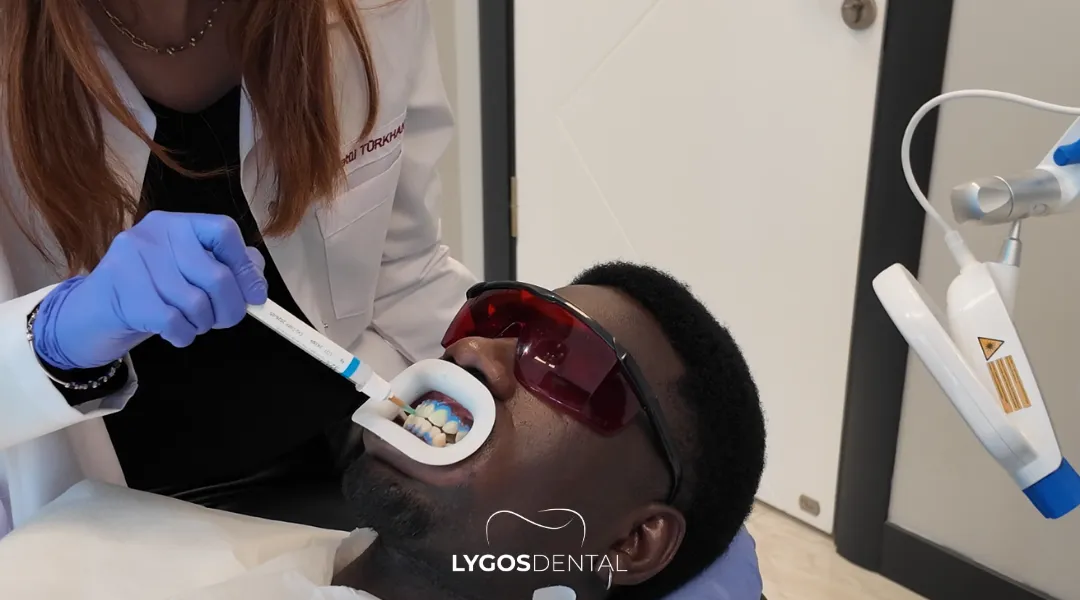
- In-office whitening uses a higher concentration of peroxide, activated by a dentist in a controlled setting — fast, often finished in a single visit.
- Take-home kits use custom-fitted trays and a milder gel, worn for a set time each day across one to two weeks.
- Hybrid plans combine both, with one in-office session followed by a short take-home phase to stabilize the shade.
The right choice isn’t about which is ‘better.’ It depends on sensitivity, schedule, and how much shade change you’re actually chasing.
Planning a Whitening Session at Lygos Dental
Before any gel touches the enamel, a proper plan matters more than most patients expect. At Lygos Dental, the process usually begins with a short digital evaluation — intraoral photos, a shade reading, and a look at enamel thickness and gum health. That’s the foundation. Without it, whitening becomes guesswork.
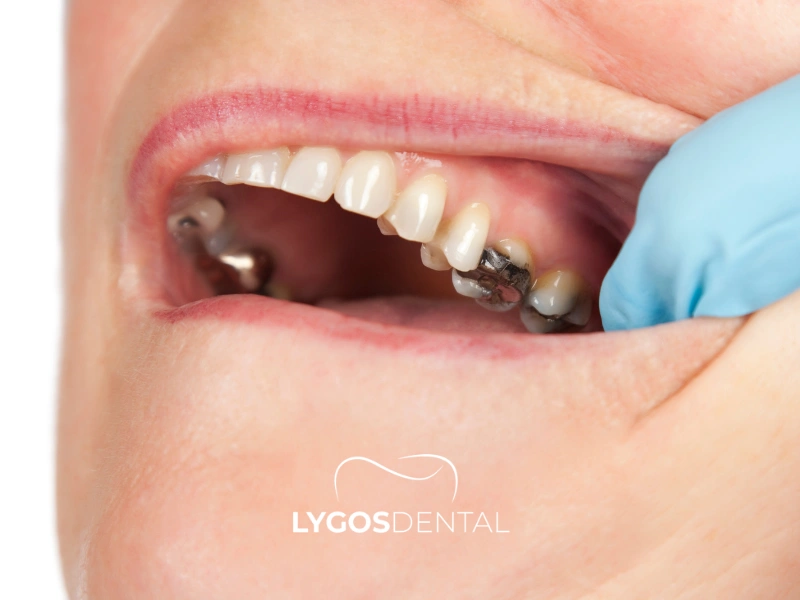
From there, the dentist talks through what’s realistic. If you have old composite fillings or crowns in the front, those won’t respond to bleaching the same way natural enamel does. A good plan accounts for that early, so the final result doesn’t leave patches of mismatched color. Patients coming from abroad usually appreciate the pre-arrival conversation: shade expectations, how many sessions, what to bring, what to avoid the night before.
Who’s a Good Candidate and Who Should Wait
Most healthy adults are candidates. But not everyone should jump in right away. Active decay, untreated gum disease, very thin enamel, or recent dental surgery are all reasons to postpone. Pregnant or breastfeeding women are usually asked to wait as a precaution.
And there’s another group worth mentioning: people chasing a shade that simply isn’t reachable through bleaching alone. In those cases, a dentist honest enough to say ‘whitening won’t get you there, but veneers or bonding might’ is doing the patient a real favor.
Aftercare That Keeps the Result Longer

The first 48 hours after whitening matter most. Enamel is temporarily more porous, and pigments from food and drink can latch on faster than usual. Small habits protect the investment.
- Skip coffee, red wine, black tea, and tomato-based sauces for the first two days.
- Avoid smoking if you can — even a few days of restraint helps.
- Use a straw for darker drinks once you return to them.
- Brush gently with a non-abrasive toothpaste.
- Touch up every 6 to 12 months with short take-home sessions, if your dentist approves.
In practice, results tend to last one to two years with reasonable care. Heavy coffee drinkers and smokers see them fade faster, and that’s honest to say.
Combining Whitening With Other Cosmetic Steps
Whitening is often the first step, not the last. Plenty of patients come in wanting a full smile refresh — whitening first, then maybe composite bonding, crown replacement, or veneers to match the new shade. Sequencing matters here, because crowns and veneers don’t bleach. They have to be designed in the final shade.
This is where Lygos Dental’s staged planning tends to pay off. When whitening is treated as part of a longer plan rather than a standalone service, the aesthetic result looks more balanced and the patient avoids paying twice for color corrections later.
What Really Influences the Cost in Istanbul
Pricing depends on more than the whitening system itself. The dentist’s experience, the clinic’s equipment, the number of sessions, and whether you’re combining whitening with other treatments all factor in. International patients flying into Yenibosna will often see quotes in euros (€), and the range can feel wide at first.
A few honest drivers behind that range:
- The type of whitening system used (laser-assisted, LED-activated, or chemical-only)
- Whether custom take-home trays are included
- How many in-office sessions are planned
- The gel concentration and brand
- Whether a cleaning or polishing session is bundled in
Patients sometimes chase the lowest number they see online. Rarely a good strategy. A ten-minute ‘offer’ session with no proper evaluation isn’t the same treatment as a planned one, even if both technically use peroxide.
Final Thoughts
Teeth whitening in Yenibosna works well when it’s treated as a planned dental procedure, not a quick cosmetic fix. The difference shows up in the longevity of the result, the comfort during treatment, and the way the final shade blends with the rest of the smile. Clinics like Lygos Dental lean into that planning side — the pre-treatment evaluation, the realistic shade conversation, the structured aftercare — and for international patients who only have a few days in Istanbul, that kind of organization is usually what turns a good appointment into a good experience.
FAQ
Hoe lang duurt het professioneel bleken van tanden in Yenibosna?
Een sessie op kantoor duurt doorgaans 45 tot 90 minuten. Take-home-plannen bestrijken een tot twee weken, met dagelijks gebruik van de dienblad thuis. Hybride abonnementen combineren beide en eindigen doorgaans binnen tien dagen.
Is tanden bleken veilig voor het glazuur?
Gedaan onder tandheelkundig toezicht met de juiste gelconcentratie, ja. Het emaille wordt niet versleten door bleken op basis van peroxide. Tijdelijke gevoeligheid komt vaak voor, maar verdwijnt bij de meeste patiënten binnen een dag of twee.
Hoeveel kost het bleken van tanden in Istanbul voor internationale patiënten?
De kosten variëren per systeem, sessie en of trays of schoonmaakbeurten zijn inbegrepen. Internationale koersen worden doorgaans in euro’s weergegeven. Het is de moeite waard om om een gedetailleerd overzicht te vragen in plaats van om één enkele prijs.
Kan ik mijn tanden witter maken als ik fineer of kronen heb?
Natuurlijke tanden worden witter, maar fineren en kronen veranderen niet van kleur. Als de restauratie zich binnen uw lachlijn bevindt, plan deze dan zorgvuldig, zodat de uiteindelijke kleur overeenkomt. Een pre-whitening consult is de juiste plek om dit uit te zoeken.
Hoe snel kan ik resultaat zien na één sessie?
De meeste patiënten merken direct na de eerste sessie op kantoor een zichtbare kleurverandering op. Het uiteindelijke, gestabiliseerde resultaat verdwijnt meestal binnen een paar dagen, zodra het glazuur weer is gehydrateerd en de lichte gevoeligheid is verdwenen.