


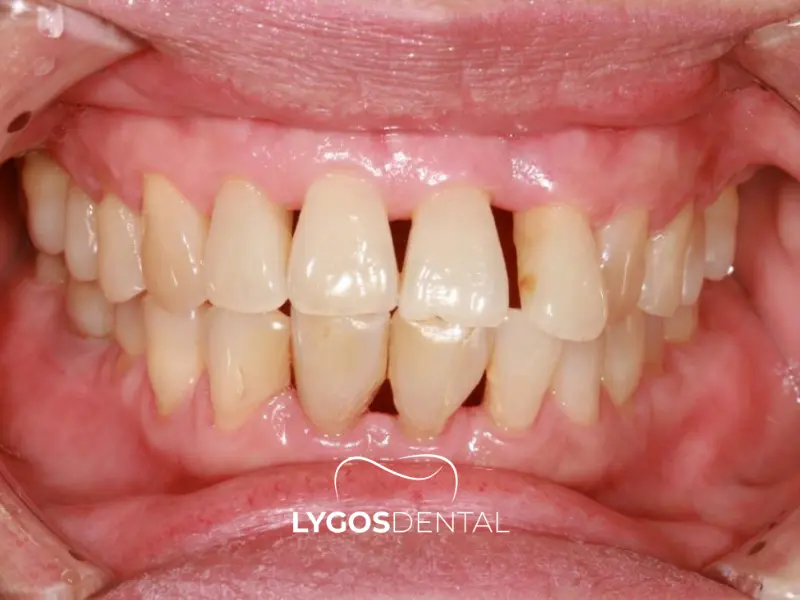
Parodontita cronica
Chronic periodontitis is a long-term gum infection caused mainly by plaque and tartar buildup. It can quietly inflame the gums, deepen pockets around teeth, and gradually weaken the bone that holds teeth in place. With early diagnosis, professional cleaning, and consistent home care, progression can be slowed or stopped and tooth loss can often be prevented.
Gum disease often starts with mild symptoms, so it can be easy to ignore. Chronic periodontitis is one of the most common forms and may progress for months or years before pain appears. Untreated disease can lead to loose teeth, tooth loss, and ongoing inflammation that affects overall health.
Ce este parodontita cronică?

Chronic periodontitis is a slow-progressing inflammation and infection of the tissues that support the teeth. Bacteria in dental plaque trigger irritation of the gums, and over time the infection can reach the periodontal ligament and jawbone. As the supporting structures break down, gums may recede and teeth can become mobile.
Parodontita cronica vs acuta
Both chronic and acute periodontitis affect the gums and the tissues around teeth, but they behave differently. Chronic disease tends to develop gradually with subtle symptoms, while acute episodes usually appear suddenly and can be painful.
| Caracteristică | Parodontita cronica | Parodontita acuta |
| Debut | Încet, adesea neobservat la început | Brusc |
| Simptome | Adesea ușoară la început; poate include sângerare, recesiune, respirație urât mirositoare | Durere mai intensă, umflături; poate include febră în cazuri severe |
| Progresie | Se dezvoltă în luni sau ani | Se poate agrava rapid |
| Prevalența | Mai frecvente | Mai puțin frecvente |
| Urgența tratamentului | Tratament planificat plus întreținere pe termen lung | Necesita îngrijire promptă pentru a controla simptomele și infecțiile |
Acute flare-ups can sometimes occur on top of chronic disease. If pain or swelling appears suddenly, a dental visit should not be delayed.
Ce cauzează parodontita cronică?
The primary trigger is bacterial plaque that stays on the teeth and along the gumline. When plaque hardens into tartar, it becomes harder to remove without professional cleaning and provides a surface where bacteria thrive.
- Placa si tartru: Periajul inadecvat și curățarea interdentară permit formarea depunerilor și iritarea gingiilor.
- Fumatul și consumul de tutun: Tutunul reduce fluxul de sânge către țesutul gingiilor și face vindecarea mai lentă.
- Susceptibilitate genetică: Un istoric familial poate crește riscul, chiar și cu o igienă rezonabilă.
- Condiții sistemice: Diabetul și alte afecțiuni care afectează imunitatea pot face infecțiile gingivale mai probabile și mai greu de controlat.
- Modificări hormonale: Sarcina, pubertatea și menopauza pot face gingiile mai reactive la placa.
Cine este în pericol?

Chronic periodontitis can affect anyone, but certain factors make it more likely or more severe. If you recognise one or more of the risks below, regular dental checks are especially important.
- Periaj neregulat și folosirea aței dentare sau dificultăți de curățare în jurul dinților, punților sau implanturilor aglomerate
- Fumatul sau vaporizarea produselor cu nicotină
- Diabet necontrolat sau alte afecțiuni care afectează răspunsul imun
- Istoric familial de boli ale gingiilor
- Săriți peste curățeniile și controalele dentare de rutină
- Stres ridicat și somn slab, care pot afecta imunitatea și obiceiurile
- Dietă săracă în nutrienți cheie (inclusiv vitamina C și proteine)
Simptomele parodontitei cronice
Symptoms can be mild in the early stages. Many people first notice bleeding while brushing or persistent bad breath rather than pain.
- Gingii roșii, sensibile sau umflate
- Sângerări la periaj, folosirea aței dentare sau la mâncare
- Recesiunea gingiei sau dinții arată „mai lungi”
- Respirație urât mirositoare persistentă sau gust rău
- Dinți slăbiți, mișcați sau împrăștiați
- Sensibilitate sau disconfort la mestecat
- Puroi, abcese sau o modificare a modului în care dinții se potrivesc
Cum îl diagnostichează stomatologii

Diagnosis is based on a clinical exam and measurements around each tooth. Dentists often use a small probe to measure pocket depths and check for bleeding, along with X‑rays to look for bone loss. The results help determine severity and guide a treatment plan.
Opțiuni de tratament
Treatment aims to control infection, reduce inflammation, and stabilise the supporting tissues. The right approach depends on how advanced the disease is and how well you can keep the area clean at home.
Tratament non-chirurgical
Most cases begin with professional deep cleaning, often called scaling and root planing. This removes plaque and tartar above and below the gumline and smooths root surfaces to make reattachment easier. Your dentist may recommend antiseptic rinses or local medications depending on pocket depth and inflammation.
Antibiotice
Antibiotics may be used in selected cases to reduce bacterial load, either as a local gel placed into pockets or as tablets. They are usually an add-on to thorough cleaning rather than a replacement for it.
Tratament chirurgical
When pockets are deep or bone loss is significant, surgery may be recommended. Procedures can include flap surgery to clean deep areas, and regenerative options such as bone grafting or guided tissue regeneration to support healing where appropriate.
Tratament cu laser
Some practices use laser-assisted therapy as part of periodontal treatment. The goal is to reduce bacteria and inflamed tissue with a minimally invasive approach. Suitability depends on the case and the equipment available.
Întreținere și urmărire
Long-term success depends on maintenance. After active treatment, your dentist or periodontist will usually recommend periodontal maintenance visits at a tailored interval, along with a home-care routine to prevent relapse.
Îngrijire ulterioară și prevenire
Chronic periodontitis is typically managed rather than “cured” overnight, so consistency matters. These habits help protect the gums and reduce the chance of recurrence.
- Perie de două ori pe zi: Folosește o perie moale și concentrează-te pe linia gingiilor.
- Curățați zilnic între dinți: Ața dentară, periile interdentare sau ața dentară pot ajuta, în funcție de distanță și de restaurări.
- Nu mai fumați: Renunțarea îmbunătățește fluxul sanguin și răspunsul de vindecare.
- Gestionați condițiile medicale: Controlul bun al diabetului este strâns legat de rezultate mai bune ale gingiilor.
- Fii la curent cu vizitele de întreținere: Monitorizarea profesională detectează recidiva devreme.
Întrebări frecvente
Se poate vindeca complet parodontita cronică?
It is a long-term condition, so the focus is usually on stopping progression and keeping the disease stable. With early care, professional treatment, and ongoing maintenance, many people keep their teeth and gums healthy for years.
Cât durează tratamentul?
Mild cases may improve after a small number of visits, while moderate to advanced disease may need several appointments and ongoing follow-up. If surgery is needed, healing and reassessment can extend the timeline.
Poate parodontita să provoace pierderea dinților?
Yes. As bone support decreases, teeth can loosen and may eventually need to be removed. Early treatment significantly reduces this risk.
Este parodontita cronică contagioasă?
The disease itself is not “caught” like a cold, but the bacteria involved can be shared through saliva. Good oral hygiene for everyone in the household and avoiding sharing toothbrushes are sensible precautions.
If you notice bleeding gums, swelling, or persistent bad breath, book a dental evaluation. Early care is usually simpler and more cost-effective, and it helps protect the teeth and bone support over the long term.
