

Dinții tratați cu canal radicular pot fi albiți?
Yes. A root canal treated tooth can often be whitened using internal bleaching, where a dentist places a whitening gel inside the tooth to lift stains from within. Results depend on the cause of discoloration and the tooth’s structure. If whitening cannot deliver a stable shade, a veneer or crown may be recommended.
De ce dinții tratați cu canal radicular își schimbă culoarea

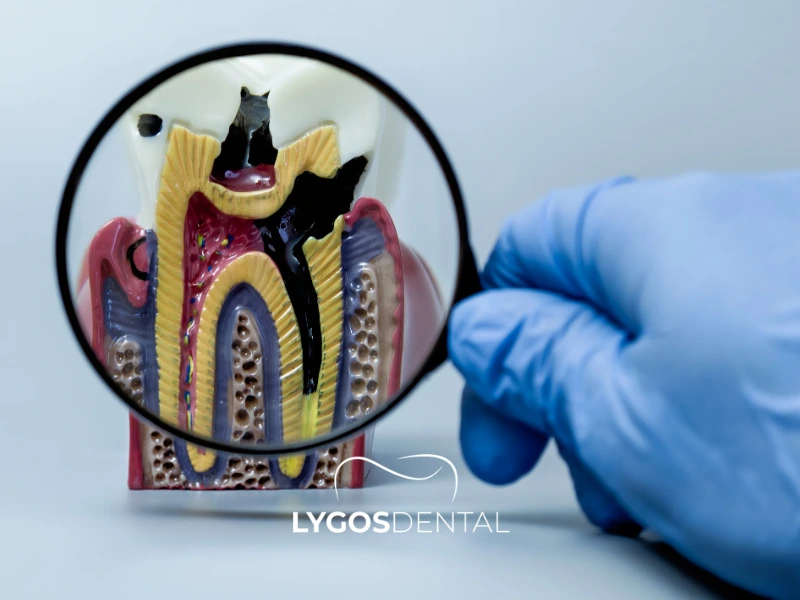
After a root canal, the tooth is no longer vital, which means it no longer has a blood supply. Over time, that can dull the tooth and change how light reflects through enamel and dentin. Discoloration is common, especially after trauma or deep decay.
- Țesutul pulpar rezidual sau produsele din sânge pot oxida și întuneca dintele din interior.
- Unele materiale și medicamente pentru canalul radicular pot contribui în timp la tonuri de gri sau maro.
- Obturațiile mari, fisurile sau microscurgerile pot permite pigmenților să pătrundă în dentina.
- Petele zilnice de la ceai, cafea, vin roșu și tutun pot face nepotrivirea nuanței mai vizibilă.
Opțiuni de albire pentru un dinte tratat cu canal radicular
Albire internă (albire non-vitală)
Internal bleaching is the main technique for a single dark tooth that has had a root canal. Your dentist creates a small access opening, places a protective barrier over the root filling, then applies a whitening agent inside the pulp chamber. The tooth is temporarily sealed and the gel is replaced over one or more visits until the color blends with neighboring teeth.
Albire externă la birou
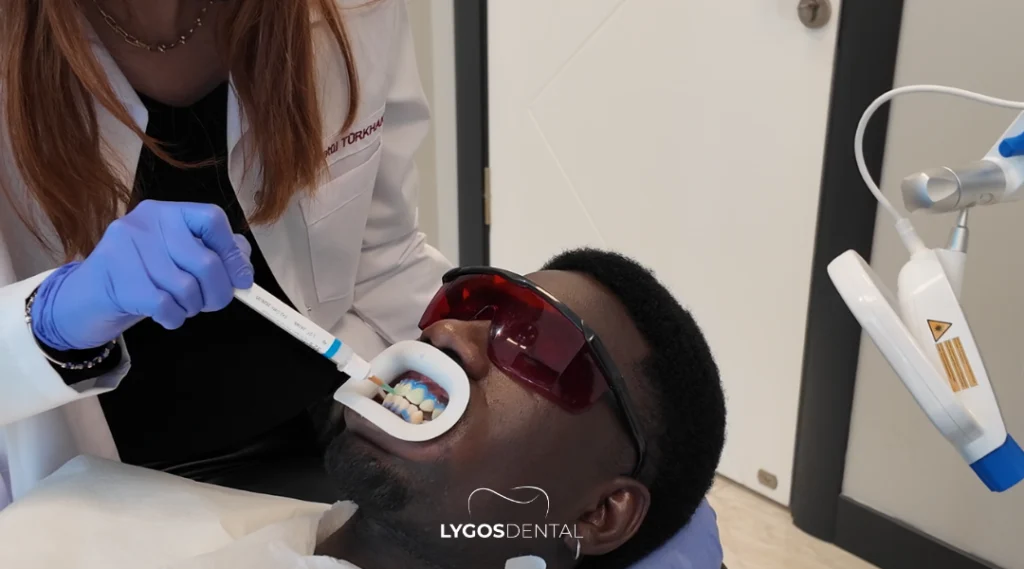
External whitening works on the outer enamel surface. It can help if the surrounding teeth are also being brightened, but it may not fully correct a dark non-vital tooth on its own. Dentists sometimes combine external whitening with internal bleaching to match shades more precisely.
Fațete sau coroane
If the tooth has extensive restorations, a crack, or stubborn discoloration, covering the tooth may be more predictable than repeated bleaching. A porcelain veneer can mask color when enough enamel remains. A crown may be preferred when the tooth is heavily filled or structurally weakened.
Cât durează albirea și cât durează rezultatele?

Internal bleaching is typically completed in one to three visits, spaced a few days apart. Many cases finish within one to two weeks, depending on how quickly the shade changes. Longevity varies, but many patients maintain the result for years with good hygiene and stain control.
Ceea ce afectează rezultatul
- Cauza decolorării (colorarea cauzată de traume se poate comporta diferit față de colorarea din materiale vechi).
- Calitatea etanșării canalului radicular și prezența oricărei scurgeri.
- Cantitatea de structură dentară naturală rămasă și dimensiunea restaurărilor existente.
- Obiceiuri zilnice precum fumatul și consumul frecvent de băuturi colorante.
Siguranță și efecte secundare
When performed by a dentist, internal bleaching is generally considered conservative because it preserves more natural tooth structure than placing a crown solely to mask color. As with any dental procedure, there are risks. A rare but important complication is external cervical resorption, which is why clinicians use a protective cervical barrier and avoid unsafe techniques.
Do not try to whiten a root canal treated tooth with over-the-counter gels placed into the tooth. Non-vital whitening requires proper isolation, correct materials, and a seal that prevents leakage.
Sfaturi de îngrijire ulterioară pentru a menține umbra stabilă

- Evitați alimentele și băuturile puternic colorate timp de 48 de ore după fiecare sesiune.
- Periati de doua ori pe zi si curatati intre dinti cu ata dentara sau perii interdentare.
- Limitați fumatul și produsele din tutun, care sunt printre cei mai puternici factori de colorare.
- Programați controale dentare de rutină, astfel încât restaurarea și etanșarea să poată fi monitorizate.
Considerații privind costurile în Turcia
Fees vary by city, clinic, and the number of sessions required. Many clinics set pricing based on whether the whitening is for a vital tooth (external) or a devital tooth (internal bleaching). In Turkey, the Turkish Dental Association publishes a guide tariff; clinics may charge above or below that guide depending on materials and service scope.
For reference, the 2026 guide tariff lists devital single-tooth whitening per session at 2,250 TL (excluding VAT) and 2,475 TL (including VAT), with restorations and material fees handled separately. A chairside exam is the only reliable way to estimate your total cost.
Întrebări frecvente
Fiecare dinte tratat de canal poate fi albit?
Many can, but not all respond the same way. Teeth with large restorations, cracks, or severe internal staining may need a veneer or crown for a stable cosmetic result.
Albirea internă este dureroasă?
It is usually comfortable because the nerve tissue has been removed. You may feel mild tenderness from the temporary filling or bite changes, which typically settles quickly.
Dintele va deveni din nou întunecat?
Color relapse can happen over time. Good oral hygiene and limiting staining habits help the shade last longer, and touch-up treatment may be possible if needed.
Albirea slăbește dintele?
Whitening itself is not meant to “thin” the tooth, but the tooth may already be structurally compromised from decay or large fillings. Your dentist will recommend the most protective option based on your bite and remaining tooth structure.