


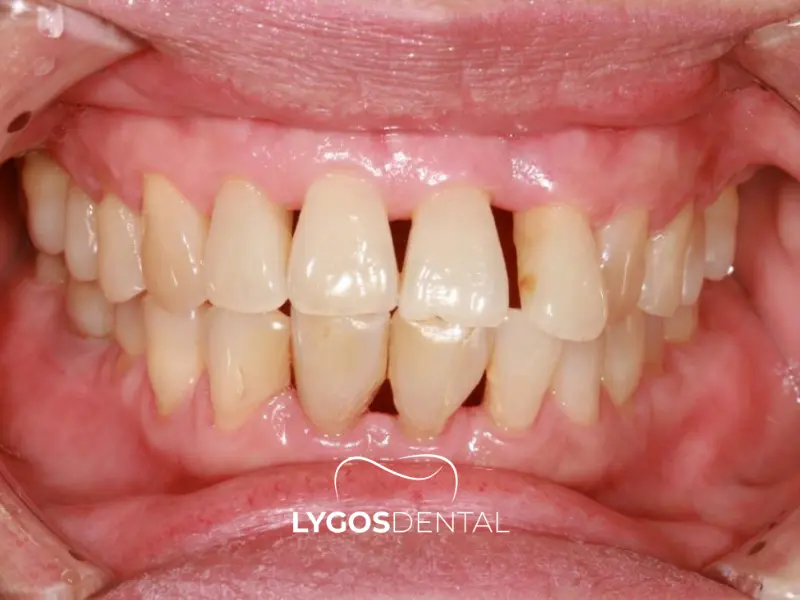
Хронический пародонтит
Chronic periodontitis is a long-term gum infection caused mainly by plaque and tartar buildup. It can quietly inflame the gums, deepen pockets around teeth, and gradually weaken the bone that holds teeth in place. With early diagnosis, professional cleaning, and consistent home care, progression can be slowed or stopped and tooth loss can often be prevented.
Gum disease often starts with mild symptoms, so it can be easy to ignore. Chronic periodontitis is one of the most common forms and may progress for months or years before pain appears. Untreated disease can lead to loose teeth, tooth loss, and ongoing inflammation that affects overall health.
Что такое хронический пародонтит?

Chronic periodontitis is a slow-progressing inflammation and infection of the tissues that support the teeth. Bacteria in dental plaque trigger irritation of the gums, and over time the infection can reach the periodontal ligament and jawbone. As the supporting structures break down, gums may recede and teeth can become mobile.
Хронический и острый пародонтит
Both chronic and acute periodontitis affect the gums and the tissues around teeth, but they behave differently. Chronic disease tends to develop gradually with subtle symptoms, while acute episodes usually appear suddenly and can be painful.
| Особенность | Хронический пародонтит | Острый пародонтит |
| Начало | Медленно, часто поначалу незаметно | Внезапный |
| Симптомы | Вначале часто бывает легким; может включать кровотечение, рецессию, неприятный запах изо рта | Более интенсивная боль, отек; в тяжелых случаях может включать лихорадку |
| Прогресс | Развивается в течение месяцев или лет | Может быстро ухудшиться |
| Распространенность | Более распространенный | Менее распространено |
| Срочность лечения | Плановое лечение плюс долгосрочное обслуживание | Требуется срочная помощь для контроля симптомов и инфекции. |
Acute flare-ups can sometimes occur on top of chronic disease. If pain or swelling appears suddenly, a dental visit should not be delayed.
Что вызывает хронический пародонтит?
The primary trigger is bacterial plaque that stays on the teeth and along the gumline. When plaque hardens into tartar, it becomes harder to remove without professional cleaning and provides a surface where bacteria thrive.
- Налет и зубной камень: Недостаточная чистка зубов и межзубных промежутков приводит к накоплению отложений и раздражению десен.
- Курение и употребление табака: Табак уменьшает приток крови к тканям десен и замедляет заживление.
- Генетическая предрасположенность: Семейный анамнез может увеличить риск даже при соблюдении надлежащей гигиены.
- Системные условия: Диабет и другие состояния, влияющие на иммунитет, могут сделать инфекции десен более вероятными и трудными для контроля.
- Гормональные изменения: Беременность, половое созревание и менопауза могут сделать десны более чувствительными к зубному налету.
Кто находится в группе риска?

Chronic periodontitis can affect anyone, but certain factors make it more likely or more severe. If you recognise one or more of the risks below, regular dental checks are especially important.
- Нерегулярная чистка зубов щеткой и нитью или трудности с чисткой скученных зубов, мостов или имплантатов.
- Курение или вейпинг никотиновых продуктов
- Неконтролируемый диабет или другие состояния, влияющие на иммунный ответ.
- Семейный анамнез заболеваний десен
- Пропуск плановых стоматологических чисток и осмотров.
- Высокий стресс и плохой сон, которые могут повлиять на иммунитет и привычки.
- Диета с низким содержанием основных питательных веществ (включая витамин С и белок)
Симптомы хронического пародонтита
Symptoms can be mild in the early stages. Many people first notice bleeding while brushing or persistent bad breath rather than pain.
- Красные, болезненные или опухшие десны
- Кровотечение при чистке зубов, использовании нити или еды.
- Рецессия десен или зубы выглядят «длиннее»
- Постоянный неприятный запах изо рта или неприятный вкус.
- Шатающиеся, смещающиеся или раздвинутые зубы
- Чувствительность или дискомфорт при жевании
- Гной, абсцессы или изменение прилегания зубов друг к другу.
Как это диагностируют стоматологи

Diagnosis is based on a clinical exam and measurements around each tooth. Dentists often use a small probe to measure pocket depths and check for bleeding, along with X‑rays to look for bone loss. The results help determine severity and guide a treatment plan.
Варианты лечения
Treatment aims to control infection, reduce inflammation, and stabilise the supporting tissues. The right approach depends on how advanced the disease is and how well you can keep the area clean at home.
Безоперационное лечение
Most cases begin with professional deep cleaning, often called scaling and root planing. This removes plaque and tartar above and below the gumline and smooths root surfaces to make reattachment easier. Your dentist may recommend antiseptic rinses or local medications depending on pocket depth and inflammation.
Антибиотики
Antibiotics may be used in selected cases to reduce bacterial load, either as a local gel placed into pockets or as tablets. They are usually an add-on to thorough cleaning rather than a replacement for it.
Хирургическое лечение
When pockets are deep or bone loss is significant, surgery may be recommended. Procedures can include flap surgery to clean deep areas, and regenerative options such as bone grafting or guided tissue regeneration to support healing where appropriate.
Лазерное лечение
Some practices use laser-assisted therapy as part of periodontal treatment. The goal is to reduce bacteria and inflamed tissue with a minimally invasive approach. Suitability depends on the case and the equipment available.
Техническое обслуживание и последующий контроль
Long-term success depends on maintenance. After active treatment, your dentist or periodontist will usually recommend periodontal maintenance visits at a tailored interval, along with a home-care routine to prevent relapse.
Последующий уход и профилактика
Chronic periodontitis is typically managed rather than “cured” overnight, so consistency matters. These habits help protect the gums and reduce the chance of recurrence.
- Чистите дважды в день: Используйте мягкую кисть и сосредоточьтесь на линии десен.
- Ежедневная чистка между зубами: В зависимости от расстояния между зубами и реставраций могут помочь нить, межзубные щетки или водные нити.
- Бросить курить: Отказ от курения улучшает кровоток и реакцию на заживление.
- Управляйте медицинскими состояниями: Хороший контроль диабета тесно связан с улучшением состояния десен.
- Следите за посещениями по техническому обслуживанию: Профессиональный мониторинг позволяет выявить рецидив на ранней стадии.
Часто задаваемые вопросы
Можно ли полностью вылечить хронический пародонтит?
It is a long-term condition, so the focus is usually on stopping progression and keeping the disease stable. With early care, professional treatment, and ongoing maintenance, many people keep their teeth and gums healthy for years.
Сколько времени занимает лечение?
Mild cases may improve after a small number of visits, while moderate to advanced disease may need several appointments and ongoing follow-up. If surgery is needed, healing and reassessment can extend the timeline.
Может ли пародонтит стать причиной потери зубов?
Yes. As bone support decreases, teeth can loosen and may eventually need to be removed. Early treatment significantly reduces this risk.
Заразен ли хронический пародонтит?
The disease itself is not “caught” like a cold, but the bacteria involved can be shared through saliva. Good oral hygiene for everyone in the household and avoiding sharing toothbrushes are sensible precautions.
If you notice bleeding gums, swelling, or persistent bad breath, book a dental evaluation. Early care is usually simpler and more cost-effective, and it helps protect the teeth and bone support over the long term.
