
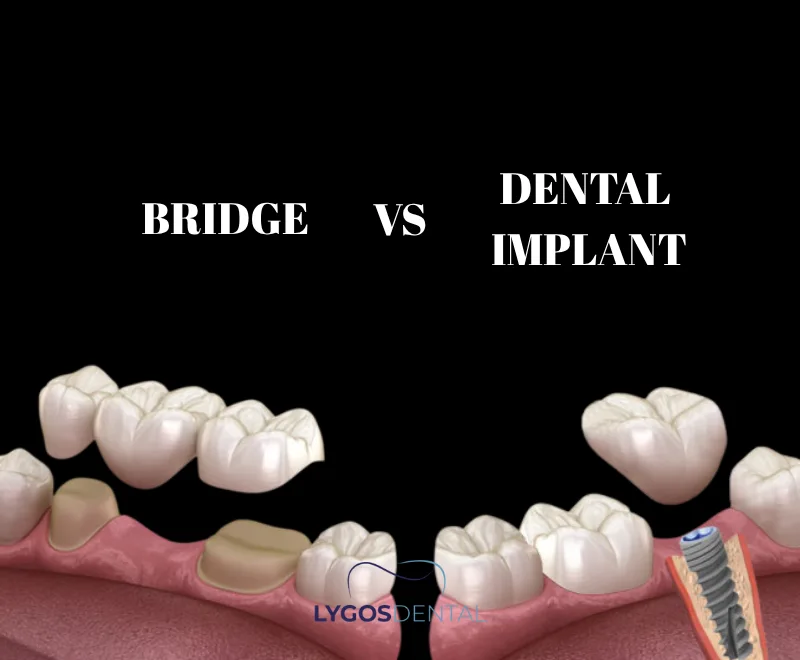
Among the most commonly preferred treatment options for tooth loss are implants and dental bridges. However, the differences between implants and dental bridges must be well understood so that patients can make the right decision. In this article, we will examine important points such as the definition, production processes, advantages, disadvantages, and costs of implants and dental bridges in detail.
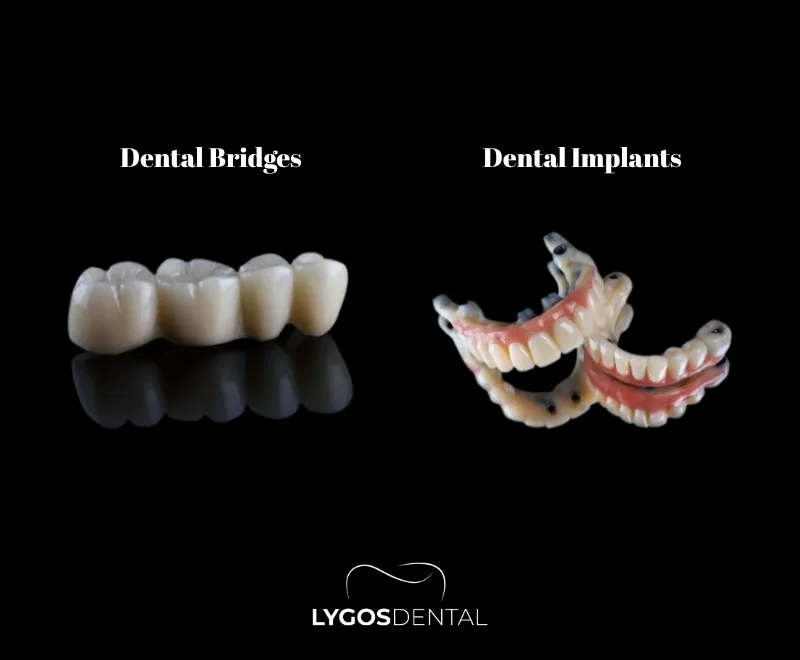
An implant is a screw-shaped structure made of titanium or similar biocompatible material placed into the jawbone to replace the natural tooth root. Porcelain or zirconium aesthetic coverings are placed on top to create a natural tooth appearance.
A dental bridge is a type of prosthesis created by shaping the healthy teeth on either side of the missing tooth. Caps are placed on the healthy teeth, and the gap is filled to restore the missing tooth appearance. In a dental bridge, the tooth loss is compensated by relying on adjacent teeth.
The main differences between implants and dental bridges stem from these structural and application principles. Implants attach directly to the bone, whereas bridges rely on neighboring teeth.
Implant treatment generally requires surgical intervention. First, a small surgical operation is performed to place the implant into the jawbone. Then the implant fuses with the bone (osseointegration), which takes between 3 to 6 months. After healing is complete, the prosthetic tooth is placed on the implant.
In dental bridges, the healthy teeth next to the missing tooth are reduced, impressions are taken, and sent to the laboratory. The prosthesis is prepared there and applied to the patient within about 1-2 weeks. It does not require surgical intervention and the recovery time is quite short.
At this point, the differences between implants and dental bridges clearly emerge in terms of treatment duration and application methods.

These differences play a decisive role in patients’ decisions regarding implants versus dental bridges.
The differences between implants and dental bridges can be summarized in terms of advantages and disadvantages as above.
In implant treatment, the healing process depends on the fusion of the implant with the bone. This period usually lasts 3-6 months, and good care by the patient is important. Mild swelling and pain can occur after surgery.
In dental bridges, since there is no surgery, the healing time is very short. The preparation of the prosthesis takes about 1-2 weeks and daily life resumes immediately after.
Differences in treatment duration between implants and dental bridges are clearly noticeable. Implants offer longer-lasting but lengthier solutions.
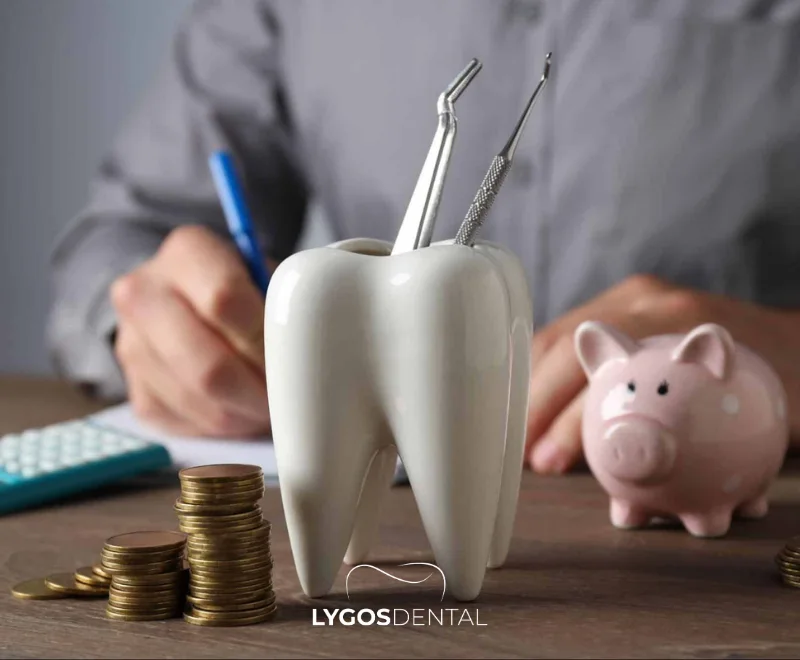
The cost of implants varies depending on the quality of materials, implant brand, and the clinic where the procedure is performed. Implants are generally more expensive than dental bridges.
Dental bridges are usually a more economical option initially. However, the need for replacement in the long term may increase the cost.
In conclusion, the differences between implants and dental bridges affect not only treatment quality but also patients’ preferences in terms of cost.
In summary, the differences between implants and dental bridges vary in terms of manufacturing method, treatment duration, durability, cost, and benefits provided. Implant treatment offers long-lasting solutions without damaging healthy teeth, whereas dental bridges quickly solve tooth loss problems without surgery. Both methods’ advantages and disadvantages should be considered, and the most appropriate method should be determined through evaluation by a specialist dentist.
You can contact us here to learn more about Cosmetic Dentistry, Dental Crown, Dental Implant and General Dentistry to make an appointment and to get information about our services.
An implant is an artificial tooth root placed in the jawbone and does not harm neighboring teeth. A dental bridge is supported by reducing the healthy teeth adjacent to the missing tooth.
Adequate jawbone density and general health are important for implants. Implant treatment may be risky for some patients with systemic diseases or who smoke.
On average, a dental bridge lasts between 5 and 15 years. Good care and regular dental check-ups can extend this period.
It takes about 3 to 6 months for the implant to fuse with the bone. Careful maintenance during this period is important.
No, dental bridges do not require surgical procedures. Only reduction of adjacent teeth is necessary.

Special Note:
Our treatments are provided by healthcare facilities that possess a health tourism authorization certificate
Special Note: Our treatments are provided by healthcare facilities that possess a health tourism authorization certificate
Selenium Retro, Ataköy 7-8-9-10. Kısım, D-100 Güney Yanyolu No:18/A, 34158 Bakırköy/İstanbul
© 2025, LYGOS DENTAL. All Rights Reserved.