

Losing a tooth is rarely just about looks. Over time, missing teeth can affect how you chew food, how clearly you speak, and even how pressure is distributed across your jaw. That’s usually when people start looking for solutions, and two options come up again and again: dental bridges and partial dentures.
At Lygos Dental, many patients arrive already confused. Some believe bridges are always the “best” option. Others worry dentures will feel bulky or obvious. The reality is simpler than that. Both dental treatments work well in the right situation. The key is knowing which one actually suits your mouth.

A dental bridge is a fixed solution. It replaces one or more missing teeth by anchoring an artificial tooth between two natural teeth. Those natural teeth are prepared to hold crowns, which support the bridge in place.
Because a bridge doesn’t move, most patients say it feels close to having a natural tooth again. You don’t remove it at night, and you don’t take it in and out during the day. Daily care is familiar—brushing and flossing—although cleaning underneath the bridge takes a bit of extra attention.
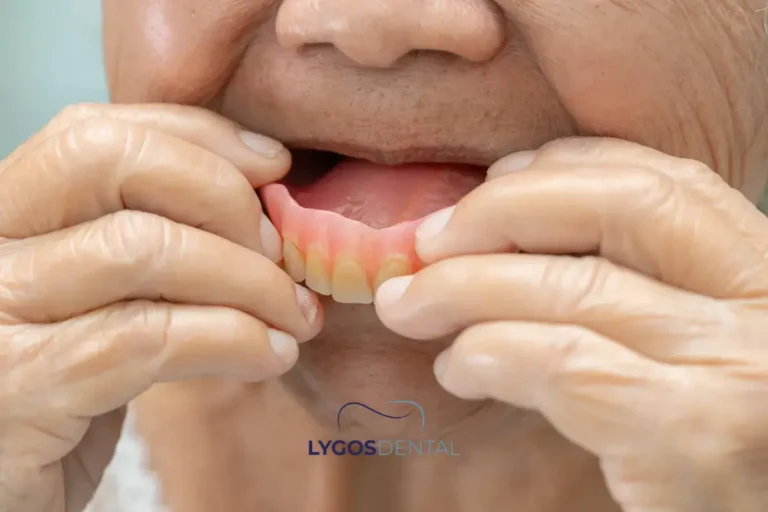
Partial dentures work differently. They are removable and designed to replace several missing teeth, sometimes in different areas of the mouth. They usually consist of artificial teeth attached to a gum-colored base, often supported by a thin metal framework.
Unlike bridges, partial dentures are taken out for cleaning and usually removed before sleep. They’re often chosen when many teeth are missing or when the remaining teeth are not strong enough to support a bridge safely.
Some patients need a short adjustment period, but once they get used to it, daily use becomes routine.
There isn’t a formula that works for everyone. Dentists look at many things: how healthy the remaining teeth are, bone support, how many teeth are missing, and whether future tooth loss is likely.
In some mouths, a bridge offers a neat, long-lasting solution. In others, using a bridge would mean reshaping healthy teeth or putting too much pressure on weak ones. In those cases, a partial denture is often the safer choice.
At Lygos Dental, treatment planning is always based on long-term results, not just what looks good right away.
Comfort is usually one of the first concerns. Bridges tend to feel more natural because they stay fixed. Partial dentures may feel unusual at first, especially while eating or speaking, but most patients adapt within time.
From an appearance point of view, both options can look very natural. Modern dental materials allow for realistic color and shape, so most people won’t notice the difference.
Daily care is different, though. Bridges need careful cleaning underneath. Partial dentures need to be removed and cleaned separately. Neither is difficult, but each requires consistency.
Long-term oral health matters more than many people expect. Bridges depend on the teeth next to the gap. If one of those teeth develops a problem later, the entire bridge may need to be replaced.
Partial dentures are more flexible. If another tooth is lost in the future, the denture can often be adjusted instead of fully remade. This is one reason dentists sometimes prefer partial dentures for patients with ongoing dental issues.

Choosing between a bridge and a partial denture isn’t just about price or convenience. It’s about how your mouth will function years from now.
At Lygos Dental, careful examinations and open conversations help patients understand their options clearly. The goal is always a solution that feels comfortable, looks natural, and supports oral health over time.
Late-night snacks aren’t your friend here, especially sugary things. Also avoid very hot or very cold drinks. If you have to eat, keep it soft and chew on the other side.
You can contact us here to learn more about Cosmetic Dentistry, Dental Crown, Dental Implant and General Dentistry to make an appointment and to get information about our services.
No.
Bridges are fixed in place, while partial dentures are removable and taken out for cleaning.
In most cases, bridges cost more.
They involve crowns, lab work, and more preparation compared to partial dentures.
A bridge may not be suitable if the supporting teeth are weak or completely healthy and would need unnecessary reshaping.
Preserving natural teeth is often the priority.
A partial denture can reduce stress on multiple teeth and avoid unnecessary tooth preparation.
It’s also more adaptable if future tooth loss is expected.
Neither is universally better.
Bridges feel more stable, while partial dentures offer flexibility and protect remaining teeth. The best choice depends on the individual case.

Special Note:
Our treatments are provided by healthcare facilities that possess a health tourism authorization certificate
Special Note: Our treatments are provided by healthcare facilities that possess a health tourism authorization certificate
Selenium Retro, Ataköy 7-8-9-10. Kısım, D-100 Güney Yanyolu No:18/A, 34158 Bakırköy/İstanbul
© 2025, LYGOS DENTAL. All Rights Reserved.